Vertical Container Gardening: Space-Saving Ideas for Small Balconies
Hook urban apartment dwellers struggling with cramped balcony space by painting a picture of lush, space-efficient vertical gardens. Introduce vertical container gardening as the ultimate solution to turn even the tiniest balcony into a thriving green oasis.
Why Vertical Container Gardening Is Perfect for Small Balconies
If you've ever looked at your tiny balcony and wished for more room to grow, vertical container gardening might just be the game‑changer you need. By taking advantage of walls, railing planters, and even overhead hanging baskets, you can turn a compact footprint into a thriving garden. It’s a simple shift in perspective: instead of fighting for floor space, you’re using the often‑ignored vertical plane to double or triple your planting area.
Going upward does more than save space. Plants positioned on shelves, trellises, or wall pockets typically enjoy better air flow and more even sunlight than those clustered on the ground. This can mean fewer fungal issues, stronger stems, and a happier garden overall. Plus, a living wall or a tiered arrangement creates a natural privacy screen that filters street views and nosy neighbors—without blocking light. Imagine sipping your morning coffee surrounded by a curtain of ferns, trailing ivy, or colorful annuals that you grew yourself.
That layered look also adds incredible visual depth. A flat balcony suddenly becomes a lush, three‑dimensional retreat. You can mix textures, let vines cascade down, or train climbing edibles upward—the design possibilities are endless. Whether you’re growing herbs, flowers, or leafy greens, vertical gardening transforms your balcony into a personal oasis that feels far larger than its square footage ever suggested.
5 Types of Vertical Planters That Save Floor Space
Choosing the right vertical planter can transform your balcony into a lush oasis without sacrificing precious square footage. Each style below works wonderfully in small spaces; mix and match a couple to match your layout, sunlight, and favorite plants.
Wall‑mounted pocket planters are fabric or plastic panels with multiple pouches that hang against a wall or railing. They tuck neatly out of the way, making them perfect for herbs like basil and parsley, or for trailing plants like pothos and ivy. Look for durable, UV‑resistant materials, and water carefully—the top pockets dry out faster than the lower ones, so check moisture levels regularly.
Tiered plant stands offer cascading shelves that can squeeze into a corner and hold several pots at once. Their stepped design ensures every plant gets sunlight without shading its neighbor. Opt for a lightweight, rust‑proof metal or bamboo model, and stagger plants with tall growers (like cherry tomatoes) on the bottom shelf and compact ones (like succulents) higher up so nothing gets blocked.
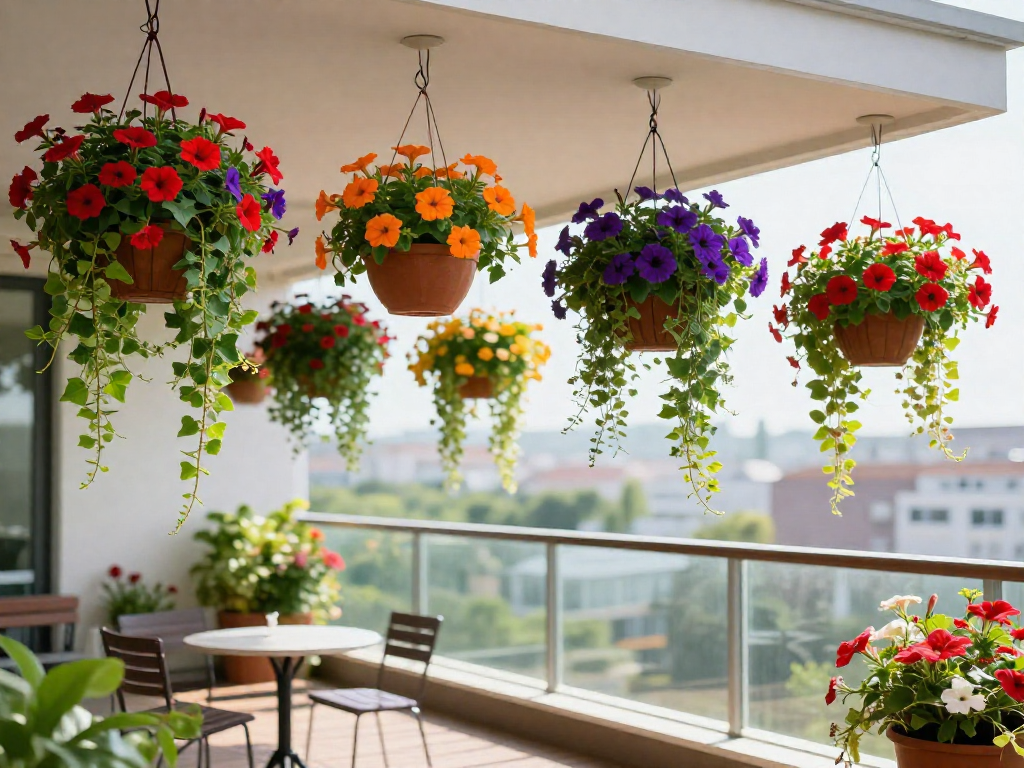
Hanging baskets free up floor and rail space entirely. Suspend them from ceiling hooks, a tension rod, or sturdy bracket brackets to let colorful blooms and trailing vines spill over the sides. Use a lightweight potting mix and line baskets with coir or moss to retain moisture. A pulley system makes watering a breeze—just lower the basket, tend, and raise it back up.
Railing planters clip securely over balcony rails without any drilling, a must for renters. These elongated troughs run along the rail and are ideal for creating a privacy screen of herbs, leafy greens, or compact flowers. Ensure the bracket fits your rail width, and consider self‑watering models if your balcony gets full sun, so plants stay hydrated all day.
Stackable pots are modular towers that let you grow upward in layers. Each tier holds a separate container, often with vertical openings for planting on all sides. They’re stellar for strawberries, lettuce, or a tower of succulents. Because they can get top‑heavy, place them against a wall and use the bottom tier for heavier plants and soil to anchor the structure.
Experiment with one or more of these vertical solutions to match your balcony’s personality and your gardening ambitions. A blend of a wall pocket for herbs, a tiered stand in the corner, and a hanging basket for showy petunias can turn even the smallest space into a thriving, multi‑level garden.
Easy DIY Vertical Garden Projects for Your Balcony
Transforming your balcony into a lush vertical garden doesn't require a big budget or permanent modifications—just a little creativity and some basic materials. These DIY projects are renter-friendly, easy to put together in an afternoon, and give you instant planting space without sacrificing your floor area.
Pallet Planter Find an untreated wooden pallet (often free at garden centers or hardware stores). Sand it lightly to remove splinters, then apply a weatherproof stain or sealant to protect the wood. Staple heavy-duty landscape fabric to the back, bottom, and sides, creating a pouch to hold soil. Stand the pallet upright against a wall or secure it with brackets if your lease allows. Fill the openings with potting mix and tuck in compact plants like succulents, ferns, or trailing flowers. Water gently from the top, and the fabric will help retain moisture.
Shoe Organizer Herb Garden A clear, over-the-door shoe organizer with deep pockets makes a perfect vertical herb bed. Hang it on a sunny balcony wall or railing, ensuring it gets at least 6 hours of light. Fill each pocket about halfway with potting mix, then plant one herb or small leafy green per pocket—basil, cilantro, lettuce, and strawberries work beautifully. Poke a few tiny holes in the bottom of the pockets for drainage, and water carefully to avoid oversaturating. This setup is especially great for renters because it's lightweight and removes in seconds.
Hanging Gutter Garden Purchase a vinyl gutter section at a home improvement store (it's inexpensive and easy to cut to size). Drill a row of small drainage holes along the bottom, then cap the ends to keep soil from washing out. Mount the gutter horizontally on a sunny wall using sturdy brackets, making sure it's sloped slightly toward one end for drainage if you want to water heavily. Fill with potting mix and plant shallow-rooted edibles like lettuce, spinach, or compact annual flowers. The sleek, modern look adds instant curb appeal, and you can paint the gutter to match your décor.
Repurposed Ladder Shelf An old wooden ladder, leaned securely against a wall, becomes an instant multi-tier plant stand. Sand and paint or seal it to protect against the elements. Place the ladder at a safe angle with the feet gripping the floor, and set potted plants on each rung. For extra stability, attach the top to the wall with a removable hook or tension strap if you're concerned about wind. Mix trailing plants on the higher rungs with bushier pots below for a cascading effect. This project highlights your favorite containers and makes watering easy since each pot is accessible.
Best Plants for Vertical Container Gardening in Full Sun/Partial Shade
Choosing the right plants for your vertical garden starts with understanding your balcony’s light conditions. Observe how many hours of direct sun each spot receives, then match your selections to that microclimate. This simple step keeps your plants healthy and productive.
Full Sun Favorites (6+ hours of direct light)
If your balcony bakes in sun most of the day, you’re in luck—many herbs, edibles, and ornamentals thrive here. Try these:
- Basil and rosemary love heat and will reward you with fragrant leaves for cooking.
- Succulents like sedums or echeverias need minimal water and store moisture in their fleshy leaves, making them ultra low-maintenance.
- Petunias offer a cascade of blooms all season long and come in colors from soft pastels to vivid jewel tones.
- Strawberries are a sweet treat; compact ever-bearing varieties produce fruit from spring to fall.
Partial Shade Performers (3–6 hours of sun)
Many balconies receive dappled light or only morning sun. These plants will flourish without full exposure:
- Ferns (such as Boston fern or maidenhair) add lush, feathery texture and love humidity.
- Pothos is a forgiving trailing vine with heart-shaped leaves, perfect for draping down a vertical planter.
- Impatiens bloom reliably in shade, brightening darker corners with pink, red, orange, or white flowers.
- Mint grows vigorously—its fresh scent and taste make it a cocktail and tea favorite. (Tip: keep it in its own container to contain spreading roots.)
Compact Veggies for Vertical Spaces
When room is tight, choose vegetables bred to stay small. These thrive in shallow containers and won’t outgrow your setup:
- Lettuce and spinach are cut-and-come-again greens; harvest outer leaves and they’ll keep producing.
- Determinate cherry tomatoes (look for varieties like ‘Tiny Tim’ or ‘Patio Princess’) grow in a bushy habit, set fruit all at once, and don’t require heavy staking.
Trailers for Drama
Let plants spill over the edges of your vertical planters to create a lush, layered look. These favorites tumble gracefully:
- String of pearls—its bead-like leaves look like a living curtain.
- English ivy or other small-leaved ivies add classic greenery and cling to trellises.
- Sweet potato vine comes in chartreuse or deep purple, instantly adding bold contrast.
Mix and match from these categories to build a vibrant vertical display that suits your light. Start with a few low-cost transplants or seeds, and observe how they perform; gardening is all about learning and adjusting.
Maintenance Tips to Keep Your Vertical Garden Thriving
A vertical garden brings big joy in a small space, but it does need a little extra attention to stay lush. Watering is often the trickiest part, since water can quickly drain through and leave roots dry. To keep things consistent, consider self-watering planters with built-in reservoirs or a simple drip irrigation kit that runs along your railing. If you're watering by hand, do it in the morning so plants can drink before the heat sets in, and pour slowly to avoid overflow.
Because nutrients wash out faster in vertical setups, feed your plants with a balanced liquid fertilizer every two weeks during the growing season. Mix it at half the recommended strength to avoid burning roots, and apply it when the soil is already moist.
Regular pruning isn't just for looks—it keeps your garden balanced and prevents top-heavy plants from tilting over. Trim leggy stems just above a leaf node to encourage bushier growth, and pinch off faded flowers to direct energy back into the plant.
Choose a lightweight potting mix that's specifically blended for containers, with perlite or vermiculite for drainage and aeration. This reduces the overall load on your wall or railing while giving roots the breathing room they need. With these simple habits, your vertical garden will reward you with vibrant growth all season long.
FAQ
How do I water a vertical garden without making a mess?
Use a watering can with a long narrow spout to direct water precisely to each pocket, and place a drip tray beneath the lowest tier to catch any run-off. For extra protection on windy days, water early in the morning when evaporation is lower and consider covering the soil surface with mulch or a capillary mat to reduce splashing.
Can I grow vegetables in a vertical container garden?
Absolutely! Many vegetables like leafy greens, herbs, cherry tomatoes, and peppers adapt beautifully to vertical setups if you choose containers deep enough for their roots. Just ensure they get at least 6–8 hours of sunlight and consistent watering, and you’ll enjoy a fresh, space-saving harvest.
What are the best vertical planters for renters?
Look for freestanding tiered plant stands, over-the-rail planters that hook securely without screws, or hanging pocket organizers that attach with adjustable straps or strong suction cups. These let you maximize vertical space without drilling or leaving marks, making them ideal for rental balconies.
How much weight can my balcony railing hold for planters?
The capacity varies, so always check your lease or ask your landlord; most railings can support light to moderate loads, but it’s safest to assume no more than 20–30 pounds per linear foot unless specified. Stick with lightweight plastic or fabric planters and distribute weight evenly along the rail to avoid overloading one spot.
Do vertical gardens need more fertilizer than regular pots?
They can, since vertical planters often have less soil volume and more frequent watering can leach nutrients. Using a slow-release granular fertilizer at planting time and supplementing with a diluted liquid feed every two weeks will keep your plants thriving without overdoing it.