Automatic vs Manual Scooter: Which to Get as a First Bike
You’re ready to buy your first scooter and hit the Malaysian roads—but should you twist-and-go or shift gears yourself? The automatic vs manual debate is a rite of passage for every new rider. This guide breaks down the real-world differences so you can pick the scooter that fits your commute, budget, and style.
Ease of Use: Twist-and-Go vs. Clutch Control
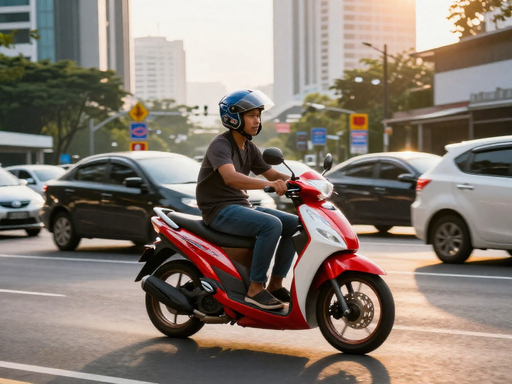
The core difference between an automatic and a manual scooter lies in how you get the wheels moving. On an automatic, often called a twist-and-go, the engine and transmission do all the work. You simply twist the throttle, and the scooter accelerates smoothly. There’s no clutch lever to pull, no gears to shift, and crucially, no risk of stalling when you stop. This simplicity makes automatics exceptionally beginner-friendly, especially during the first few nervous rides.
A manual scooter, in contrast, asks for more coordination. You must operate a clutch lever with your left hand, use your left foot to shift gears, and modulate the throttle with your right hand—all in harmony. Get the timing wrong, and you’ll stall, especially when pulling away from lights or tackling a hill. The learning curve is steeper, and it can take weeks of practice before shifting becomes second nature.
In Malaysia’s notorious stop-and-go traffic, the automatic’s advantage becomes even clearer. On roads like the Federal Highway or Penang’s inner-city jams, an auto lets you inch forward effortlessly. A manual, meanwhile, forces constant clutch work, leaving your left hand tired and your focus split. For new riders in congested areas, the reduced workload of an automatic means you can keep more attention on the road, check mirrors, and anticipate hazards, building confidence faster. Many learners report feeling safer and more in control when they aren’t wrestling with gears.
Cost and Fuel Efficiency in Malaysia
When deciding between an automatic and a manual scooter or underbone, the upfront cost and long-term running expenses can make a significant difference, especially for a first bike. In the Malaysian market, popular automatic models like the Yamaha NMAX and Honda Vario typically carry a showroom price between RM9,000 and RM10,500, while more budget-friendly autos such as the Modenas Karisma can be found for around RM5,500 to RM6,500. On the manual side, sporty cubs like the Yamaha Y15ZR and Honda RS150R generally range from RM7,500 to RM9,000, with the no-frills Modenas GT128 offering an entry point below RM6,000. So while automatics often command a slight premium, there are affordable options in both categories.
Fuel efficiency is another area where manuals tend to edge ahead. A well-ridden manual underbone can easily return 45–55 kilometres per litre, whereas automatic scooters, with their continuously variable transmissions, usually deliver between 35 and 45 km/l in real-world commuting conditions. Over thousands of kilometres, this difference adds up, making manuals a more economical choice for daily riders concerned about petrol costs.
Thankfully, insurance and road tax costs are straightforward and won’t sway your decision much. Road tax for motorcycles up to 150cc is a flat RM2 per year, and for those up to 200cc it’s just RM4—identical regardless of transmission. Insurance premiums are calculated based on engine capacity and market value, not gearbox type, so you’ll pay similar amounts for an auto and a manual bike of the same cc and price bracket. Do check for any no-claim discount (NCD) benefits if you’re upgrading from a previous policy.
Finally, consider resale value. In the used bike market, manual cubs like the Y15ZR and RS150R have long been favourites among younger riders and are known to hold their value well. However, automatic scooters—especially models like the NMAX and Honda PCX—are catching up fast as more Malaysians embrace the convenience of twist-and-go. Both types have strong demand, but if you plan to sell within a few years, a manual underbone in a popular colour scheme might fetch a slightly higher resale percentage. Ultimately, your choice should balance upfront cost, fuel savings, and how long you intend to keep the bike.
Maintenance: CVT vs. Chain and Clutch
When it comes to keeping your scooter running smoothly, the type of transmission plays a big role in the maintenance routine. For first-time owners, understanding what's required can help you pick a bike that fits your lifestyle and willingness to get your hands dirty.
Automatic scooters use a Continuously Variable Transmission (CVT) that relies on a belt and roller weights to shift seamlessly. The main upkeep involves replacing the CVT belt every 15,000 to 20,000 kilometers – a cost that typically ranges from RM80 to RM150 depending on the model. Roller weights may also need changing if they wear unevenly, which is a straightforward job. Daily checks are minimal: just monitor the gear oil level and keep an ear out for unusual belt squeal. There's no chain to lubricate, which is a blessing in Malaysia's dusty and wet conditions.
Manual scooters, on the other hand, use a traditional chain-and-sprocket system with a manual clutch. The chain demands regular attention – cleaning and lubing every 500 to 1,000 kilometers to prevent rust and premature wear. Chain and sprocket replacement runs about RM100 to RM250 every two years or so. Clutch cable adjustment keeps the lever feel consistent, and you may find yourself changing oil more frequently (every 2,000 to 3,000 km) because the clutch often shares engine oil, accelerating its degradation. While these tasks aren't overly complex, they require a bit more commitment than an auto scooter.
In terms of long-term reliability, both systems can last if cared for properly, but Malaysian heat and rain can take a toll. CVT belts may slip or snap if not changed on schedule, while chains can develop kinks or rust quickly if neglected. Many riders find that automatic scooters hold up well with simple interval-based servicing, making them more forgiving for those without a maintenance routine.
DIY-friendliness is another factor. Basic CVT maintenance – checking the belt and rollers – can be done with a few tools once you learn the process. For manuals, chain adjustments and oiling are simple even for beginners, but clutch work often requires more skill. If you have no mechanical background and prefer a cleaner, less frequent hands-on upkeep, the automatic scooter is often the more practical choice.
Performance, Control, and Fun Factor
When it comes to riding dynamics, the choice between automatic and manual scooters shapes how you experience the road. Automatic scooters with a CVT (Continuously Variable Transmission) rely on belt-driven pulleys that adjust seamlessly. Tuning the CVT – by swapping rollers or springs – can sharpen acceleration and hike top speed, but out of the box most remain smooth and linear. Manual scooters, with fixed gear ratios and a clutch, let you hold each gear to its peak, often giving a livelier feel off the line. The difference in top speed on a 110–150cc machine might be modest, but the way you get there feels distinct.
Cornering and downhill runs highlight another divide. On an auto, closing the throttle simply coasts you along; you lean on the brakes for speed control. A manual scooter lets you use engine braking – downshifting into a lower gear compresses the pistons and slows the rear wheel smoothly, giving you more command without overheating the brakes. On twisty Malaysian B-roads or steep slopes in areas like Genting Highlands, this extra control can inspire confidence. For off-road paths or uneven kampung tracks, a manual’s low-gear torque can chug along at a crawl without stalling, where a CVT might need to rev higher to engage. That crawler capability can be a real advantage when you’re navigating muddy or gravelly stretches.
Beyond the practical points, there is the simple matter of fun. Many riders feel more connected to the machine when they are actively shifting – timing the clutch, blipping the throttle, feeling each ratio engage. It turns a commute into an engaging ritual. Others prefer the effortless flow of a twist-and-go, focusing entirely on the scenery and the ride. Neither is right or wrong; it is about what makes you grin inside your helmet. If possible, test-ride both types before deciding, and see which one speaks to your biking soul.
Licensing and Legal Considerations for New Riders
For any new rider in Malaysia, understanding the licensing landscape is essential before picking your first bike. The good news is that both automatic and manual scooters fall under the same B2 license category, provided the engine capacity does not exceed 250cc. So whether you're eyeing a twist‑and‑go scooter or a manual cub, you only need one license to get started.
When it comes to the JPJ practical test, most official driving institutes supply manual motorcycles for the circuit. This means you'll need to learn basic clutch control and gear shifting to pass, even if you plan to ride an automatic scooter afterward. Don't let this deter you – many students find the skills manageable with a few extra practice sessions, and the confidence gained is valuable on the road.
Once you obtain your B2 license, the probationary (P) period applies equally to all transmission types. There are no separate restrictions for automatic versus manual bikes; you simply need to display the P sticker, avoid expressways if under certain conditions, and adhere to the standard rules for two years. This uniform policy keeps things simple for new riders.
Looking ahead, if you have ambitions to upgrade to a full B license for larger motorcycles, starting with a manual scooter can be a smart move. The clutch and gear practice you build now will transfer directly, making the upgrade process smoother. That said, plenty of riders happily stick with automatics for their commuting ease, and you can still upgrade later by taking additional lessons. The choice truly depends on your long‑term riding goals.
Final Verdict: Which Should You Choose as a First Bike?
Your ideal first bike ultimately depends on your daily routines, riding ambitions, and personal comfort. That said, here’s how to think through the decision based on what we’ve covered so far.
If you face heavy Malaysian traffic every day and prioritize sheer convenience, an automatic scooter is hard to beat. Twist-and-go simplicity lets you focus on the road without juggling a clutch, and the under-seat storage is a bonus for errands. New riders often feel less intimidated, which can mean more time in the saddle building confidence.
On the other hand, choose a manual if you enjoy mastering a skill, dream of upgrading to bigger bikes later, or are working with a tighter budget. The clutch control you learn transfers directly to larger motorcycles, and manual bikes often cost less upfront. You’ll also get a deeper sense of connection with the engine—a reward many riders find well worth the early learning curve.
Whenever possible, schedule test rides at a dealership. Even 15 minutes on each type can clarify what feels right for your body and reflexes. Ask about rental options if you want a longer trial.
Most importantly, the best first bike is the one that makes you eager to ride again tomorrow. Choose the machine that gives you that confidence, and you’ll never look back.
FAQ
Is a manual scooter better for learning how to ride?
An automatic scooter is generally easier for beginners because you don't need to manage a clutch and gears, allowing you to focus on balance and road awareness. However, learning on a manual can build fundamental riding skills if you're willing to practice. For most new riders in Malaysia, starting with an automatic is more practical.
Are automatic scooters more expensive to maintain?
Automatic scooters often have simpler drivetrains but their CVT belts and rollers need periodic replacement, which can add to maintenance costs. Manual scooters may require clutch adjustments, but overall costs are comparable if maintained regularly. In Malaysia, both types are affordable to maintain with proper care, though automatics might need belt changes every 15,000-20,000 km.
Which scooter is cheaper to buy in Malaysia?
Entry-level automatic scooters like the Yamaha Ego or Honda BeAT are very affordable, often cheaper than manual models. However, manual scooters are less common new; you might find budget-friendly used options. Generally, automatic scooters dominate the budget segment in Malaysia due to high demand.
Can I ride a manual scooter with an automatic B2 license?
No, a B2 license allows you to ride motorcycles up to 250cc, but your license may be endorsed for automatic-only if you tested on an automatic scooter. Check your license card: if it shows 'A' for automatic restriction, you cannot legally ride a manual; you'll need to retake the test on a manual bike.
Which is safer for a beginner: automatic or manual?
Automatic scooters are safer for most beginners because they eliminate distractions like gear shifting and stalling, letting you focus on traffic and braking. Manual scooters can be safe once mastered, but the learning phase poses higher risk of errors. In stop-and-go Malaysian traffic, automatics reduce fatigue and the chance of clutch mistakes.